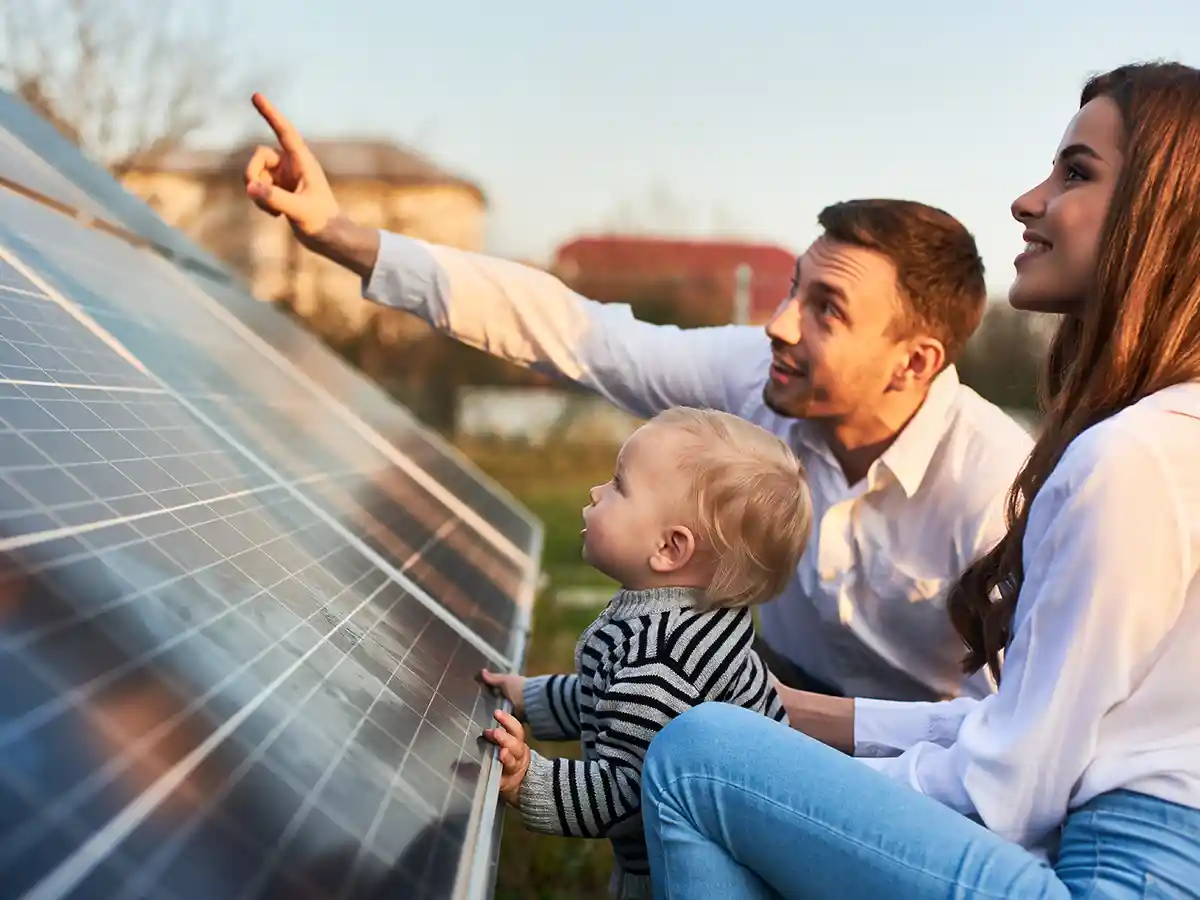
The power goes out at two in the afternoon. Full sun, not a cloud in the sky, and twenty-four solar panels sitting on the roof doing absolutely nothing.
That's the moment most homeowners with solar find out something nobody told them at installation: your panels don't power your house during a blackout. Not because anything's broken. Not because the sun went anywhere. Because the system is doing exactly what it's designed to do.
It's one of the most common, and most expensive feeling, misunderstandings in home energy. And it's worth clearing up properly, because the fix isn't complicated. It's just not automatic.
Why Your Panels Go Dark With Everything Else
Here's the part that surprises people: a standard grid-tied solar system is required to shut down during an outage. It's not a malfunction, it's a safety feature called anti-islanding, and it exists for a genuinely good reason.
When utility crews work on downed lines, they need those lines to be dead. If your solar system kept feeding power backward into the grid during an outage, it could re-energize a line a lineworker believes is safe, with real danger attached to that mistake. So the system shuts itself off the moment it senses the grid go down, full stop, sun or no sun.
Your panels are still up there, still capable of generating electricity. They're just not allowed to send it anywhere. Which means, in the most common home solar setup, an outage looks exactly the same with panels as it does without them.
Myth #1: "I Have Solar, So I Have Backup Power"
This is the big one, and it's an easy assumption to make. Solar feels like independence from the grid, so it's natural to assume it means independence during an outage, too.
It doesn't, unless the system is specifically designed to. Solar generates electricity. It doesn't store it, and without storage, there's nothing to draw on the moment the grid disappears.
Myth #2: "A Battery Only Buys Me a Few Hours"
This one used to be closer to true. Early home battery systems were small, and mostly marketed as a way to shift electricity use to cheaper hours, not as real backup power.
That's changed. Modern battery systems, like FranklinWH and EP Cube, are built to island your home from the grid the instant it goes down, disconnecting automatically and switching to stored power in a fraction of a second, often before anyone in the house even notices. Paired with solar, the battery recharges through the day, which means a well-sized system can carry essential circuits for a genuinely useful stretch of an outage, not just a few hours before dinner.
Myth #3: "Any Battery Works With Any Solar Setup"
Not quite. Not every battery is designed to island a home, and not every solar installation is wired to support one. Retrofitting battery storage onto an existing solar system is common and usually straightforward, but it does need to be sized and configured for your actual panels, your actual roof, and your actual electrical panel. This is where a proper assessment matters more than a product name on a spec sheet.
What an Outage-Ready Solar Setup Actually Looks Like
The fix for all three myths is the same: pair solar with a battery system built for backup, not just savings. When it's set up correctly, here's what actually happens during an outage:
The grid goes down. The battery system senses it instantly and disconnects your home from the utility line, the same anti-islanding logic, just working in your favour now. Your home's essential circuits switch to battery power, seamlessly enough that most people don't notice the transition at all. During daylight hours, your solar panels keep generating, feeding that power into the battery instead of the dead grid, extending how long the system can carry you.
The panels didn't fail you. They were just missing the one piece that lets them actually help during a blackout.
When to Add a Generator Into the Mix
For most day-to-day outages, a well-sized battery and solar setup covers it. But some situations call for more staying power than any battery alone can offer: multi-day storms, properties with heavy essential loads, or homes that simply want a deeper safety margin.
That's where a hybrid approach comes in: solar and battery for the instant, silent, everyday response, and a Briggs & Stratton standby generator for the longer events battery capacity alone can't fully cover. Together, they cover both ends of the outage spectrum, the quick blip and the multi-day event, without asking you to choose between quiet and endurance.
FAQ: Solar and Power Outages
Does solar work during a power outage?
The panels themselves keep generating electricity in daylight, but a standard grid-tied system without a battery shuts off automatically during an outage and won't power your home. A battery-backed solar system is required for outage protection.
Why do solar panels shut off during a blackout?
It's a safety requirement called anti-islanding, designed to prevent solar systems from sending power back into lines that utility crews believe are de-energized during repairs.
Do I need a battery if I already have solar?
If outage protection matters to you, yes. Solar alone generates power; a battery stores it and allows your system to island itself and keep essential circuits running when the grid goes down.
Can I add a battery to solar panels I already have?
In most cases, yes. Retrofitting a battery system onto existing solar is common, though it needs to be properly sized and configured for your specific setup.
How long can a solar battery power my home during an outage?
It depends on battery capacity, what circuits you're running, and how much sunlight is available to recharge it. A proper assessment of your essential loads is the best way to determine realistic runtime.
The sun coming out during a blackout should be good news, not a reminder of what your system isn't doing. Gridiron Power builds solar and battery systems, using FranklinWH and EP Cube, that are designed to actually island your home when the grid goes down, plus Briggs & Stratton standby generators for the outages that run longer than any battery should have to handle alone.
See what an outage-ready solar setup looks like, or talk to us about turning the panels you already have into real backup power.

Designed for what matters most.
Sometimes, you just can’t afford for the power to go out. Have a bit of peace of mind during a power outage with Gridiron.