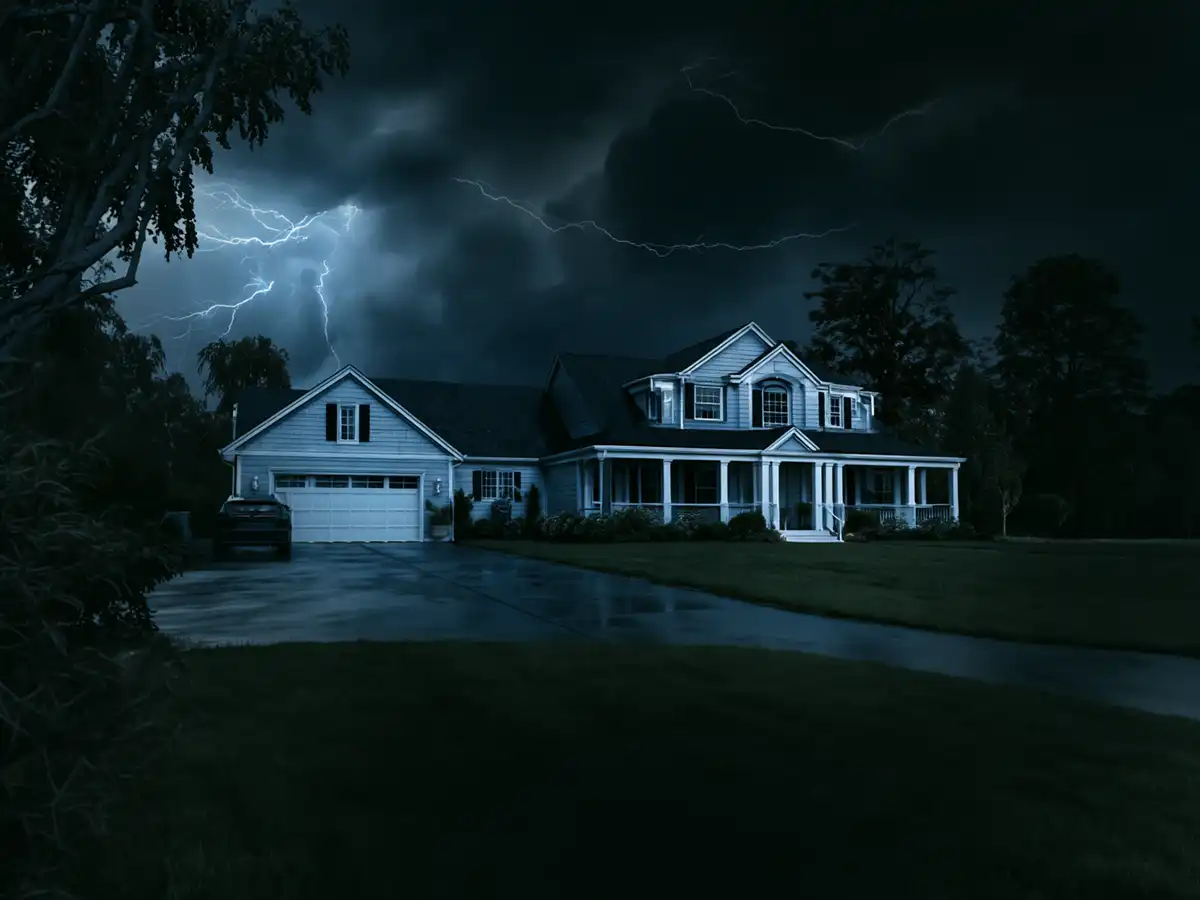
The Third Time This Year
You're sitting in the dark with your phone flashlight propped against a water bottle, listening to the wind do something it really shouldn't be doing to the trees outside, and somewhere between checking the outage map for the third time and doing the math on how long the freezer will hold, the same thought shows up that showed up last time.
We should really do something about this.
Except this isn't the first outage this year, or even the second, and "we should really do something about this" has quietly become the most repeated sentence in the house, right up there with "how long do you think it'll be this time."
If that sounds familiar, you're not alone and you're not careless. Backup power is one of those purchases almost nobody makes ahead of the problem, it tends to get decided in the dark, literally, usually somewhere around outage number three.
Why It's Always "Someday"
Most home decisions get made because something visibly demands attention. A roof leaks, so you fix the roof. A furnace starts making a noise, so you call someone. There's a clear before and after, and the "before" is uncomfortable enough on its own to push you into action.
Backup power just doesn't work that way, because between outages, everything genuinely seems fine. The lights work, the fridge hums along in the background, and the whole idea of a standby generator or a battery system quietly slides down the list behind whatever's actually demanding attention that week. There's no warning light that tells you your house has no plan for the next multi-day outage. The first real sign tends to be the outage itself, and by then planning has already turned into scrambling.
None of that makes it a character flaw. It's just how the decision is structured, since the problem stays invisible right up until the moment it isn't.
It's Not Just a Feeling
If it seems like outages are happening more often than they used to, that's not just a sense of dread talking. The Canadian Electricity Association, which has tracked major weather-related outage events since 2003, reports that those events have climbed steadily over the past several years, and a lot of that comes down to storms doing more damage than the grid was originally built to handle.
Toronto is a good example of what that looks like in practice. A single rainstorm in 2024 knocked out power to roughly 170,000 customers, and researchers at the Canadian Climate Institute point out that this kind of extreme weather event is becoming the norm rather than the exception as the climate continues to shift. The same pattern is showing up elsewhere too, with utility leaders in Alberta, Ontario, and Quebec all reporting new record peaks in electricity demand in recent years, driven by more extreme heat and cold pushing the grid closer to its limits.
It adds up to a real cost, too. Climate-related strain is already estimated to be costing Canada's electricity system roughly $1.5 billion more every year, a number that's projected to keep climbing without significant infrastructure upgrades. None of that means the grid is failing outright, but it does mean the odds of an outage reaching your street, and lasting longer once it does, are trending in one direction.
The Cost of Waiting Shows Up Twice
Here's what actually makes "someday" an expensive plan, rather than just a mildly annoying one.
First, there's the gap. Every outage that happens between now and whenever you finally get around to it plays out with zero protection, full stop, and that's not a small thing across a Canadian winter, where an ice storm or a serious wind event can take a neighbourhood down for days rather than hours.
Second, when people do finally act, they're usually acting mid-crisis, which is about the worst possible moment to make a considered decision. Installers get slammed right after major storms, popular models sell through fast, and what could have been a calm, well-planned install with some lead time turns into "whatever's available, whenever someone can get to it," often at a premium, right in the season when demand for backup power spikes across the province.
Waiting doesn't just delay the purchase, in other words. It tends to make the eventual purchase worse.
What "Too Late" Actually Looks Like
It rarely looks dramatic in the moment. Mostly it looks like ordinary bad luck landing on a house that had nothing standing between it and the damage.
It's coming home from a long weekend to a freezer full of ruined food because the outage happened while nobody was around to notice. It's a sump pump going quiet during a spring thaw, with a basement quietly taking on water before anyone realizes there's a problem at all. It's a parent or grandparent who depends on powered medical equipment, sitting through a multi-day outage with no backup plan in place. It's pipes freezing and bursting somewhere behind a wall, in a property that happened to be empty for exactly the wrong three days.
None of these start out as emergencies. They start as perfectly ordinary outages that simply had nothing in the way of them turning into real damage.
Treat It Like Insurance, Not a Renovation
Part of what keeps backup power stuck in "someday" is that it tends to get filed mentally alongside the big renovation decisions, the kind of thing you plan carefully, compare endlessly, and eventually get around to. It actually fits a lot better in a different category, closer to smoke detectors or winter tires. Not exciting, rarely top of mind, and entirely about being in place before the moment it's actually needed.
Nobody feels great buying insurance. Almost everybody feels relieved they had it.
You Don't Have to Decide Today, Just Stop Waiting on "Someday"
None of this is a push to pick a system in the next five minutes. It's more of a nudge to move backup power out of the vague someday pile and into an actual, dated plan, even if that plan is simply "get a proper assessment before next storm season."
A quick look at what your home actually needs to stay protected, along with a realistic sense of how long installation takes in your area, is usually enough to turn an abstract someday into a concrete timeline. From there, choosing between a standby generator, a battery system, or a hybrid setup tends to get a lot easier, mostly because it's happening on a calm afternoon instead of during outage number four.
FAQ: Getting Ahead of Backup Power
How long does it typically take to get a generator installed?
Timelines vary by property and system, but installs generally take longer to schedule right after major storm events, when demand spikes across the region. Planning ahead of storm season usually means shorter wait times and more availability.
Is it too late to prepare for this winter?
It's rarely too late to start the process, though timelines do get tighter the closer you get to peak storm season, so the sooner an assessment happens, the more options tend to be realistically available before conditions turn.
Do I need to decide on a generator, battery, or hybrid system right away?
Not really. The first useful step is usually a proper assessment of what your home needs to stay protected, things like essential circuits, expected outage length, and budget, and the right system choice tends
The best time to think about backup power is on a calm, ordinary day, not the third outage of the year. Gridiron Power can help you figure out what your home actually needs, whether that's a Briggs & Stratton standby generator, a FranklinWH or EP Cube battery system, or a hybrid setup built around both, before the next storm ends up making the decision for you.
Talk to us before you need us.

Designed for what matters most.
Sometimes, you just can’t afford for the power to go out. Have a bit of peace of mind during a power outage with Gridiron.